
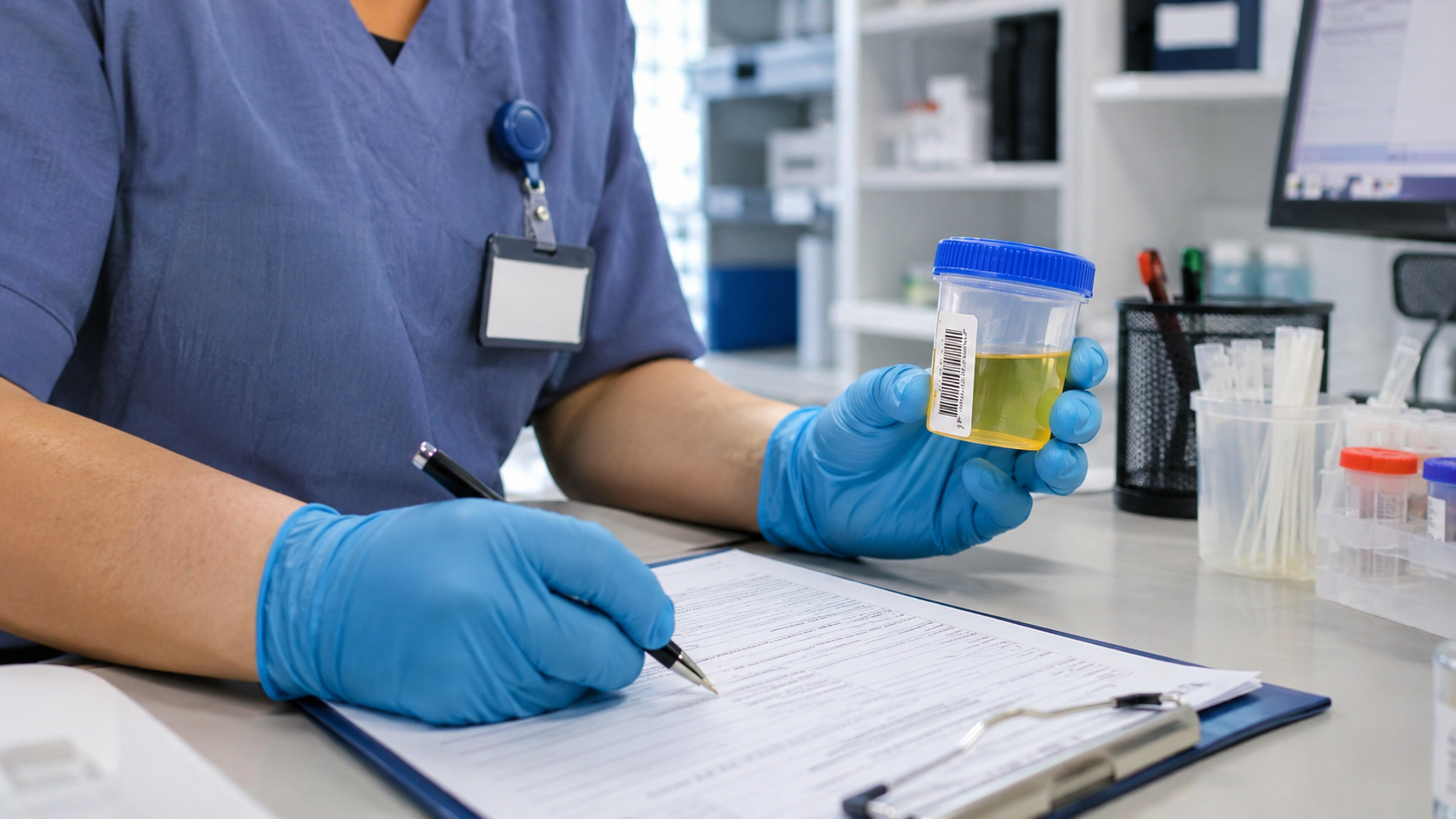
A chain of custody drug test is a drug test that includes a documented record of how a person’s sample is collected, sealed, handled, and transferred for testing. The purpose is to establish that the specimen belongs to the person being tested and that it has been properly handled throughout the process.
You may be asked to complete this type of test for a job, probation requirement, child custody case, or another legal matter. In these situations, a drug test result alone may not be enough. The organization requesting the test may also need documentation showing that the sample was handled correctly from collection through laboratory testing.
Unlike a routine drug screening, a chain of custody test follows specific documentation and handling procedures. These requirements can vary depending on whether the test is for employment, probation, or another legal purpose.
When Is a Chain of Custody Drug Test Required?
Chain of custody drug testing is generally required when the results must be formally documented and verified, particularly for legal, employment, or compliance purposes. Whether it’s mandatory depends on who requests the test and the procedures they require.
Court-Ordered and Probation Drug Testing
Courts may require chain of custody testing in cases involving probation, child custody disputes, or other legal proceedings where substance use is a concern. The documentation helps establish that the results belong to the person being tested and that the specimen was handled according to the required procedures.
For someone on probation, testing may be scheduled regularly or conducted randomly, depending on the conditions of supervision. In child custody cases, drug testing may also be requested as part of a broader assessment of a parent’s substance use. Our article on substance abuse evaluations for child custody explains what those evaluations involve and how they differ from routine drug screening.
Not every court requires the same type of test. Some specify the collection method, laboratory, or documentation needed, so it’s important to follow the instructions in your court order.
Employment and Workplace Drug Testing
Employers commonly use chain of custody testing for pre-employment screening, random drug testing, workplace accidents, and situations involving reasonable suspicion of substance use.
Certain transportation workers, including commercial drivers in federally regulated positions, must undergo drug testing under U.S. Department of Transportation (DOT) rules. These tests follow the collection, documentation, and laboratory procedures established under 49 CFR Part 40.
Private employers outside DOT regulations may also require chain of custody testing. However, their policies can differ, particularly regarding which substances are tested, the circumstances requiring a test, and how results are reviewed.
Recovery and Substance Use Monitoring
Chain of custody testing may also be used by addiction treatment programs, sober living facilities, and other supervised recovery programs.
For example, a treatment program may require regular testing to document substance use during recovery. When results are used for formal compliance or shared with an outside organization, documented specimen handling may be necessary.
Requirements vary between programs. Some accept routine drug screenings, while others require laboratory testing with a complete chain of custody record.
What Happens During a Chain of Custody Drug Test?
The chain of custody drug testing process depends on the type of specimen being collected and the requirements of the organization requesting the test. Urine testing is commonly used for workplace and court-related purposes, so the steps below explain what typically happens during a documented urine collection.
1. Your Identity and Testing Information Are Verified
The collector begins by confirming your identity and reviewing the information needed for the test.
You will usually be asked to provide valid identification, such as a driver’s license or government-issued photo ID. The collector also checks the testing paperwork to confirm who requested the test and where the results should be sent.
For DOT collections, the collector must follow specific identification requirements before beginning the process.
This is also a good time to confirm that the correct test has been ordered. For example, your paperwork may require a particular drug panel or testing procedure.
2. The Specimen Is Collected Under Established Procedures
For a routine urine collection, the collector provides instructions and a collection container. You then provide the required amount of urine.
Under standard DOT urine collection procedures, the individual generally provides the sample in private. Directly observed collections are required only in certain circumstances specified by federal regulations.
After receiving the specimen, the collector checks its volume, temperature, and appearance according to the applicable procedure.
These checks help identify possible collection problems. An unusual temperature, insufficient sample, or evidence of tampering may require additional steps before the collection can be completed.
3. The Sample Is Sealed and Identified
Once the sample has been collected and checked, it must be secured.
The collector places the specimen into the appropriate container and applies tamper-evident seals. These seals help show whether the container has been opened or disturbed after collection.
You may be asked to initial the seals and sign the collection paperwork to confirm that the specimen is yours.
For DOT urine drug testing, the collector divides the specimen into two bottles. One is the primary specimen, while the other is retained as a split specimen for possible additional testing.
The DOT’s urine specimen preparation rules require the collector to complete these steps in the employee’s presence.
Not every non-DOT drug test uses the same split-specimen procedure, so the requirements depend on the type of test being performed.
4. The Chain of Custody Form Is Completed
The collector records the specimen identification number, collection date and time, and other required details on the chain of custody form. The documentation also identifies the collector and records the transfer of the specimen for laboratory testing.
For DOT drug testing, the Federal Drug Testing Custody and Control Form (CCF) is required. The collector completes the appropriate sections, signs the form, and provides copies to the designated parties. You also receive a copy of the completed paperwork.
Non-DOT workplace and court-ordered tests may use different forms, depending on the requirements of the testing program.
5. The Specimen Is Transferred to the Laboratory
The sealed specimen is packaged and sent to the laboratory for analysis. When it arrives, laboratory personnel examine the specimen and its accompanying documentation to check for issues such as damaged seals, missing information, or identification numbers that don’t match.
Any discrepancies must be addressed according to the applicable testing rules. Certain problems can be corrected through additional documentation, while more serious errors may prevent the laboratory from accepting the specimen.
The laboratory maintains its own records of specimen handling during testing, continuing the chain of custody established at the collection site.
Understanding Chain of Custody Drug Test Results
Chain of custody documentation establishes how the specimen was handled. The laboratory testing determines whether the substances included in the ordered drug panel were detected.
The result depends on the drugs being tested, the type of specimen collected, and the laboratory’s testing procedures.
Negative Drug Test Result
A negative result generally means that the substances included in the test panel were not detected at or above the applicable reporting thresholds.
However, a negative result does not necessarily mean a person has never used drugs. Different substances remain detectable for different lengths of time, and testing only measures what the selected method is designed to identify.
For more information about detection windows, see our article on how long drugs show on a urine test.
Positive Drug Test Result
A positive drug test result means that testing has identified a substance or its metabolite according to the applicable criteria.
For laboratory-based testing, an initial positive screen is typically followed by confirmatory testing before a final positive result is reported.
In DOT-regulated testing, a Medical Review Officer (MRO) reviews laboratory-confirmed non-negative results. The MRO is a licensed physician responsible for considering whether there is a legitimate medical explanation for the result before verifying it.
For example, certain prescription medications may require medical review to determine whether they explain a laboratory finding.
The review process for non-DOT testing depends on the employer’s or requesting organization’s testing program.
Invalid, Rejected, or Cancelled Tests
Sometimes the laboratory cannot produce a reportable result, or the testing process contains a problem that prevents the result from being accepted.
An invalid result may arise from characteristics of the specimen that interfere with testing. A test may also be rejected because of collection or documentation problems.
Under DOT regulations, certain chain of custody errors are considered serious enough to require cancellation. Examples include a specimen identification number that does not match the form or a broken specimen seal that cannot be resolved under the applicable rules.
Other paperwork errors may be correctable.
A cancelled test is not the same as a negative result. Depending on the circumstances and governing rules, another collection may be required.
Can You Request a Retest of a Chain of Custody Drug Test?
Retesting may be possible, but the rules depend on whether the test was conducted under DOT regulations, an employer’s testing policy, or a court-ordered program.
For DOT drug testing, employees generally have 72 hours after being notified of certain verified results to request testing of their split specimen through the Medical Review Officer (MRO). This allows a second certified laboratory to examine the retained specimen rather than requiring a completely new collection.
Non-DOT and court-ordered testing programs may have different procedures or deadlines. When you believe a result is incorrect, contact the organization that requested the test promptly to find out whether a retest is permitted and how to request one.
What Should You Check Before Scheduling a Chain of Custody Drug Test?
Having the correct paperwork before your appointment can prevent unnecessary delays, especially when testing is required for court or employment.
Start by checking exactly what the requesting organization requires. A referral that says "drug test" may not provide enough information to choose the correct service.
Confirm the following details:
- Whether the test must follow DOT or non-DOT procedures
- Whether urine, hair, oral fluid, or another specimen type is required
- Which drugs must be included in the testing panel
- Whether laboratory testing and chain of custody documentation are mandatory
- Where the results must be sent and when they are due
For example, a court may require a documented laboratory urine test rather than an instant screening result. Completing the wrong type of test could mean having to repeat the process.
You can read more about the substances included in a commonly requested panel in our article, What Is a 5-Panel Drug Test and What Does It Test For?
Bring a valid photo ID and any testing authorization or referral paperwork to your appointment. If the instructions are unclear, confirm the requirements with the employer, court, or organization requesting the test before scheduling.
Chain of Custody Drug Testing in Sacramento, CA
Life Steps Consulting provides drug and alcohol testing in Sacramento for individuals, employers, and people who need testing for legal or court-related purposes.
Our services include chain of custody procedures and documentation for applicable testing requirements, including workplace and DOT drug testing.
Whether you need a test for probation, employment, or another documented testing requirement, it’s important to arrange the correct collection method and paperwork from the beginning.
Contact us to discuss your drug testing requirements, confirm available testing options, and schedule an appointment in Sacramento.