
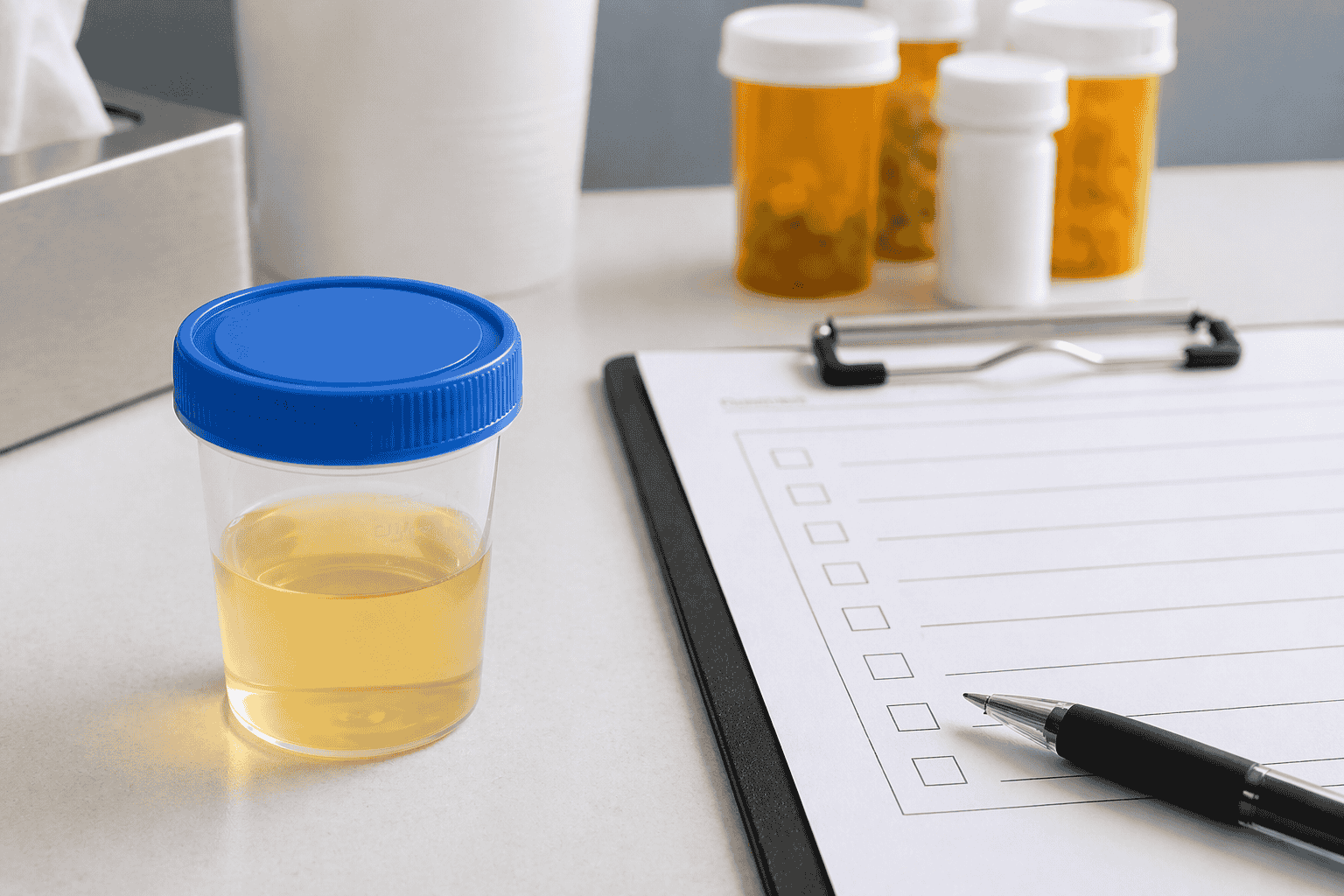
If you have been asked to take a drug test for a job, a court order, or a treatment program, there is a good chance it is a 5-panel drug test. It is one of the most widely used drug screening tools across the country, and yet many people have no idea what it actually covers or how it works until they are standing at the testing site.
This article walks through everything you need to know about the 5-panel drug test, what substances it detects, how the process works, and why it matters whether you are an employer, someone in recovery, or a person who has just been handed a test order.
What Is a 5-Panel Drug Test?
A 5-panel drug test is a standard drug screening that checks a person’s sample for five specific categories of controlled substances. It is the baseline test used by many employers, federal agencies, probation departments, courts, and substance abuse programs. The “5” simply refers to the number of drug classes the test is designed to detect.
The most common sample type used for this test is urine, though saliva, hair, and blood-based versions also exist depending on the testing context. Urine testing is the most widely administered because it is non-invasive, relatively affordable, and capable of detecting recent drug use across a reasonable detection window.
The federal government, through the Substance Abuse and Mental Health Services Administration (SAMHSA), established the original 5-panel standard for workplace drug testing, and it has remained the foundation of most drug screening programs in the United States.
What Substances Are Included in a 5-Panel Drug Test?
The five drug categories screened in a standard 5-panel drug test are:
| Drug Class | Common Substances Included | Typical Urine Detection Window |
| Marijuana (THC) | Cannabis, hash, edibles, concentrates | 3 to 30+ days depending on use frequency |
| Cocaine | Cocaine, crack cocaine | 2 to 4 days |
| Opiates | Heroin, codeine, morphine, some prescription pain medications | 2 to 4 days |
| Amphetamines | Methamphetamine, amphetamine, MDMA, Adderall, Ritalin | 2 to 4 days |
| Phencyclidine (PCP) | PCP, angel dust | 7 to 14 days |
Each of these five categories represents a class of substances rather than a single drug, which means the test can pick up multiple related compounds within each group. For example, the opiate panel does not only detect heroin. It can also flag codeine or morphine, which sometimes shows up in prescription medications.
Marijuana (THC)
Marijuana is detected through THC metabolites, specifically THC-COOH, which is stored in fat cells and released slowly over time. This is why cannabis has one of the longest detection windows of any substance on the panel. A casual user might test clean within a few days, while a daily user can test positive for several weeks after their last use. It is also worth noting that marijuana remains federally illegal even in states where it is recreationally legal, which is why it stays on federal workplace panels.
Cocaine
Cocaine and its metabolite benzoylecgonine are what the test looks for in this category. Cocaine itself leaves the system relatively quickly, but benzoylecgonine is detectable for two to four days in urine for most users. Heavier or prolonged use can push that window a bit further. The test does not distinguish between powder cocaine and crack cocaine because both produce the same metabolites.
Opiates
The opiate panel on a 5-panel drug test traditionally targets naturally occurring opiates and some semi-synthetic ones, including heroin (which converts to morphine in the body), codeine, and morphine. It is important to understand that synthetic opioids like fentanyl, oxycodone, and hydrocodone are not always detected by the standard opiate panel and may require separate, expanded testing to identify. If you are taking a legitimately prescribed opiate medication, disclosing that prescription before the test is always the right step.
Amphetamines
This panel covers a broad range of stimulants. It includes methamphetamine, amphetamine, MDMA (ecstasy), and prescription stimulants like Adderall and Ritalin. If you have a valid prescription for an amphetamine-based medication, the medical review officer reviewing your results can take that into account. A positive result due to a legitimate prescription does not automatically translate to a failed test in most employment contexts.
Phencyclidine (PCP)
PCP is a dissociative drug that tends to have a longer detection window than most of the other substances on the panel. It can remain detectable in urine for up to two weeks for occasional use and even longer in chronic users. While PCP use has declined compared to prior decades, it remains on the standard panel because of its significant impairment potential and the safety risks it presents in workplace settings.
How Does the 5-Panel Drug Test Work?
Most 5-panel drug tests involve providing a urine sample at a collection site, a clinic, or in some cases directly at a workplace or program facility. The collection process follows strict chain-of-custody procedures to prevent tampering and ensure the sample is legitimate.
Once collected, the sample goes through an initial immunoassay screening. This is a quick chemical test that checks whether any of the five drug classes are present above a specific cutoff concentration. If the initial screen comes back negative for all five, the process ends there and the result is reported as negative.
If one or more substances screen positive, the sample is sent for a secondary confirmation test using gas chromatography-mass spectrometry, or GC-MS. This is a far more precise and specific method that can identify the exact compound present and confirm that the initial positive was accurate rather than a false positive triggered by something like a food, supplement, or over-the-counter medication.
A medical review officer (MRO), typically a licensed physician, then reviews confirmed positive results before they are reported to the requesting employer or agency. The MRO gives the tested individual an opportunity to explain any prescription medications that could account for a positive result.
Who Uses the 5-Panel Drug Test?
The 5-panel drug test is used across a wide range of settings. Federal agencies and employers governed by Department of Transportation regulations are required by law to use this exact panel for pre-employment, random, post-accident, and return-to-duty testing. It is the standard for safety-sensitive industries including transportation, aviation, healthcare, and construction.
Beyond federally mandated testing, many private employers choose the 5-panel as their default pre-employment screen because of its cost-effectiveness and wide coverage. Courts, probation and parole departments, child protective services, and substance abuse treatment programs also regularly use the 5-panel test to monitor compliance and sobriety.
In substance abuse treatment settings, the 5-panel test is a practical tool for tracking a client’s progress in recovery. When results are reviewed within a supportive, clinical context, they become part of a broader conversation about what is working and where more support may be needed, rather than simply a pass-or-fail outcome.
5-Panel vs. Other Drug Tests: What Is the Difference?
The 5-panel is the baseline, but there are expanded versions that screen for more substances. Understanding the differences helps clarify why someone might be ordered a specific test type.
| Test Type | Number of Panels | Additional Substances Covered |
| 5-Panel | 5 | THC, cocaine, opiates, amphetamines, PCP |
| 10-Panel | 10 | Adds benzodiazepines, barbiturates, methadone, propoxyphene, methaqualone |
| 12-Panel | 12 | Often adds oxycodone and buprenorphine |
| Extended Opiate Panel | Varies | Adds fentanyl, oxycodone, hydrocodone, tramadol |
Courts, treatment programs, and some employers with specific concerns about prescription drug misuse may opt for a 10-panel or 12-panel test to get a more complete picture. The choice of panel often comes down to the specific needs of the requesting organization and the substances most relevant to their population or industry.
If you are wondering how long each of these substances actually stays detectable in your system, that depends on several factors including frequency of use, metabolism, and the type of sample collected. We cover all of that in detail in our guide on how long drugs show on a urine test .
Can a 5-Panel Drug Test Produce a False Positive?
Yes, false positives can and do happen on the initial immunoassay screening. This is precisely why the GC-MS confirmation step exists. Certain substances have been known to trigger cross-reactive results on the initial screen, including some over-the-counter cold medications, antihistamines, antidepressants, and foods like poppy seeds, which can cause an opiate flag in rare cases.
The MRO review process is a safeguard against a legitimate medication or food interaction being misreported as a positive result. If you are taking prescribed medications or supplements, be prepared to provide documentation to the MRO if a positive result comes back.
What Happens If You Fail a 5-Panel Drug Test?
The consequences of a positive result depend entirely on why the test was administered. In an employment context, a failed pre-employment test typically means the job offer is rescinded. A failed test during employment can result in suspension, termination, or mandatory referral to an employee assistance program depending on company policy.
In a legal or court-ordered context, a positive result may violate probation terms and carry serious legal consequences. In a treatment or recovery monitoring context, a positive result is usually handled differently. Rather than a purely punitive response, many programs treat it as clinical information that signals a need for reassessment, adjusted support, or a different level of care.
If you are in recovery and working within a treatment program, a positive test result is not the end of the road. It is a signal that the current approach may need adjustment, and it opens the door to a more direct conversation about what obstacles are getting in the way of lasting sobriety.
Frequently Asked Questions About the 5-Panel Drug Test
Does a 5-panel drug test detect alcohol?
No. A standard 5-panel drug test does not include alcohol. Alcohol testing requires a separate breathalyzer, urine ethanol, or EtG (ethyl glucuronide) test. Some programs combine alcohol and drug testing, but alcohol is not one of the five panels in a 5-panel drug screen. If you want to understand exactly how alcohol screening works and whether you can fail one, we cover that in detail in our guide on whether you can fail a screen for alcohol.
Does a 5-panel drug test detect prescription medications?
It depends on the medication. Prescription stimulants like Adderall and prescription opiates like codeine will show up on the relevant panels. However, many newer prescription drugs such as fentanyl, oxycodone, benzodiazepines, and muscle relaxants are not included in the standard 5-panel and require expanded testing to detect.
Is the 5-panel drug test the same as the SAMHSA-5?
Yes. The 5-panel drug test is often referred to as the SAMHSA-5 because the Substance Abuse and Mental Health Services Administration established the five-substance standard for federally mandated workplace drug testing. The terms are used interchangeably.
Can you request a retest if you believe a result is wrong?
In most cases, yes. If a confirmed positive result is reported, the tested individual can request that the split sample be sent to a separate certified laboratory for independent confirmation. This right is standard in federally regulated testing programs.
How long does it take to get results?
A negative result is typically reported within 24 to 48 hours. If the sample requires GC-MS confirmation for a non-negative result, the process can take three to five business days. The MRO review process adds additional time on top of that if there is a confirmed positive.
Need drug and alcohol testing in Sacramento? Life Steps Consulting provides professional drug and alcohol testing services as part of a comprehensive approach to counseling, court-ordered evaluations, and recovery support. Call us at (916) 247-8226 or request a consultation online to learn how we can help.
Final Words
The 5-panel drug test is a straightforward, widely trusted screening tool that covers five major drug classes: marijuana, cocaine, opiates, amphetamines, and PCP. It is used across employment, legal, and treatment settings because it provides a reliable snapshot of recent substance use without being unnecessarily invasive or expensive.
Whether you are preparing for a pre-employment test, navigating a court-ordered evaluation, or supporting a family member in a recovery program, understanding what the test screens for and how the process works removes a lot of the uncertainty that comes with it.
If you have questions about drug testing in the context of treatment, court compliance, or recovery counseling, the team at Life Steps Consulting is here to help you make sense of the process and connect you with the support you need.